
The Invisible Cost of Endurance
Many people who live through prolonged instability develop strength.
They become perceptive.
Adaptable.
Responsible.
Able to make sense of complex situations.
But this strength often develops in private.
It does not come with promotions.
Or titles.
Or applause.
It comes from facing challenges.
And it is accompanied by fatigue.
And often comes along the haunting question:
“How many times do I have to adapt?”
Why Being Strong Eventually Breaks You
Strength is often praised as an unlimited resource.
People who endure difficulty without visible collapse are admired.
They are described as resilient, dependable, and mature.
“They don’t need help”
“They can do it”
That’s the common belief.
But strength used continuously without protection does not create stability.
It creates erosion.
Chronic endurance requires constant nervous system activation.
Even when outward functioning appears intact, internal reserves are being spent.
A person continues to do what feels right.
Continues to take responsibility.
Continues to tolerate instability.
Eventually, strength is no longer empowering.
It becomes the mechanism through which harm is repeatedly absorbed.
Until breaking down happens.
Slowly, as:
• a loss of direction
• emotional flatness
• fluctuations between highs and lows
• deep exhaustion that resting alone cannot repair
Strength without protection is not sustainable.
It is prolonged exposure until breaking down becomes inevitable.
When Your Strength Has No Room to Operate
I derive aliveness from improving systems.
I feel engaged when organizing complexity.
When refining direction.
When clarifying ambiguity.
When connecting disconnected pieces.
And in environments that require endurance of what is wrong rather than integrating what is right, my orientation becomes a liability.
Because fixing, optimizing, and creating sustainable structures
is not welcomed in such environments.
Which are everywhere.
The result of working in such systems is psychological flattening.
A sense of being cognitively unemployed.
So strength has no operational outlet.
To recover.
And be used creatively.
The Surgeon Without an Operating Room
Strength without purpose or feedback can become explosive.
Imagine training for years to perform intricate procedures.
Then being placed in a setting where no procedures are required.
Hands remain skilled.
Knowledge remains present.
But opportunity disappears.
Over time, unused capability turns inward.
Questions multiply.
Self-doubt emerges.
Existential rumination replaces applied reasoning.
The issue is not loss of competence.
It is the lack of context, use, and return on investment.
Why Intelligent People Fear Hope
Hope is often framed as a universal good.
But for individuals who have been strong for too long,
hope can become a liability.
A scary possibility of believing:
that something will start working, only to fail again
that they found where they can operate, only to be rejected again
that they have found love, only to be hurt again
that they found support, only to be abandoned again
Individuals who have been strong for a long time
are aware of all these probabilities.
They have been through all of them.
They have more disappointments in their return sheet
than they have successes.
This awareness can make optimism feel risky.
Not because they are inherently negative.
But because they understand the emotional cost of repeatedly failed expectation.
In this context, hope becomes something they must manage.
To be balanced with their reality.
Others may interpret this attitude as cynicism.
But, in reality, it is a form of adaptation.
Of self-preservation.
From falling into a fantasy
of getting what they dreamed of one day.
Wanting Something Solid
After prolonged periods fluctuating between hope and uncertainty,
the nervous system of a strong individual longs for something solid.
A commitment that holds.
A structure that does not disappear next month.
A predictable rhythm.
For them, solidity becomes more valuable than excitement.
From the outside, this may look like loss of ambition.
But desiring stability is not the opposite of aspiration.
It is what allows aspiration to unfold without constant threat of collapse.
For sometimes the most intelligent move is not to expand.
It is to secure your ground first.
Final Thoughts
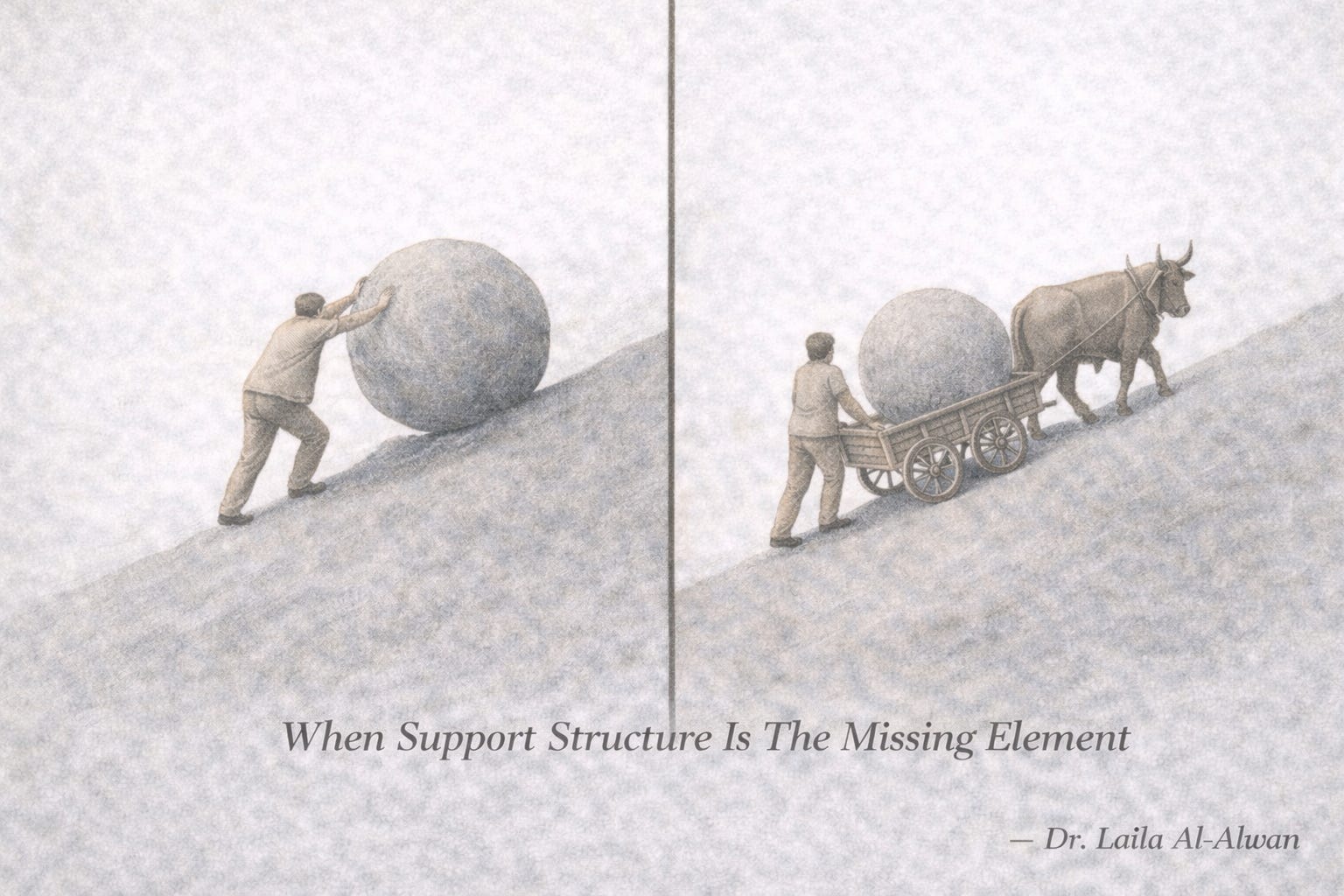
Not many people know how to be strong.
and few of them know what supports their strength.
The missing layer is structure.
Without it, strength erodes power.
With it, strength becomes power.
If you know someone who may enjoy reading this post. Please share it with them :)
I would love to read your comments too, so don’t shy away from sharing your thoughts
As always, wonderful piece.
I resonate how hope can feel threatening.
“But desiring stability is not the opposite of aspiration.
It is what allows aspiration to unfold without constant threat of collapse.
For sometimes the most intelligent move is not to expand.
It is to secure your ground first.”
This spoke to me in a very real way. Very few people understand this, especially, those on the outside hardly ever do.
Thank you for writing and sharing. ♥️
How are you doing?